

Advanced Search
Results 2181 - 2200 of 2291
HD4200B
HD5200B
HD6200B
HD6600B
LD2026K
Agricultural Films: Real Productivity Boost or Just a Myth?
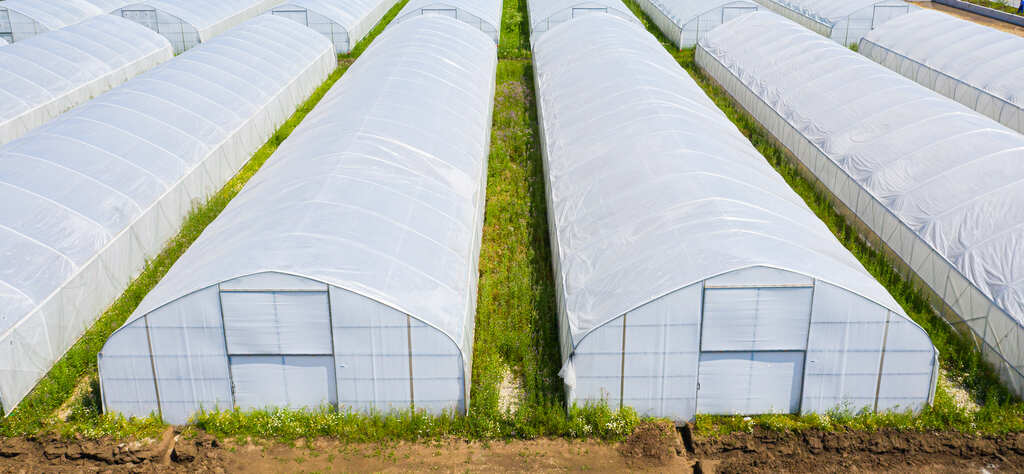
Most people are familiar with plastics in everyday life—used for food and beverage packaging, bags, or outdoor furniture. But did you know that plastics also play an important role in agriculture? They help boost productivity and effectively reduce costs. This is what we call “agricultural film.”
Agricultural Films Not Only Support Farming — They Add Value to Your Produce
Plastic is one of the most versatile inventions ever created, crafted for countless applications. Beyond everyday items, packaging, and industrial components, plastics also play a vital role in agriculture — widely known as agricultural films.
Agricultural films are plastics specifically designed for farming applications, such as greenhouse covers, mulch films, seedling bags, planting trays, and other related products. These films do more than simply assist in cultivation; they increase the value of agricultural produce, reduce the need for chemical pesticides, and improve both yield quality and appearance — ultimately helping farmers achieve better market value.
Successful farming requires far more than favorable weather conditions and access to adequate water resources. Farmers need to manage crop environments daily — including moisture, temperature, and soil nutrients — to ensure healthy growth and optimal yields.
Greenhouse cultivation is one key innovation that enables farmers to control the growing environment more precisely. While greenhouses were traditionally built with costly glass, the development of plastic greenhouse films made the technology more affordable while maintaining high performance. Beyond greenhouse covers, plastic mulch films are also used to control weeds and moisture, reducing farming costs and minimizing exposure to harmful chemicals.
Because of these advantages, manufacturers have continuously developed agricultural films to be more durable, efficient, and environmentally friendly — creating sustainable solutions that help reduce pollution in the long run.
Case Study: How France Uses Agricultural Films to Outperform Unpredictable Weather
France, known for its rapidly shifting climate, is one of the countries where agricultural films have become essential. Farmers use these films to protect crops from harsh weather fluctuations and pests, helping accelerate plant growth and increase yields.
Crops commonly grown with agricultural films in France include corn, melons, beans, and potatoes — all of which benefit from earlier harvesting when compared to conventional open-field farming.
Choosing the Right Agricultural Film Can Boost Yield and Quality
Today, many types of agricultural films are designed to suit different purposes — helping create optimal growing conditions and prevent pest damage. The result is larger, healthier produce with greater market value.
GreenhouseFilms
Historically, greenhouses were made of glass, making them expensive to build. Plastic films later emerged as a cost-effective alternative while delivering similar results.
Greenhouse films are now widely used in the U.S., Europe, Japan, and Thailand. They effectively control humidity and temperature, protect crops from pests and diseases, allow year-round cultivation, and significantly reduce pesticide use.
There are two main types:
- High greenhouse covers — tall enough for people to work inside.
- Low tunnel covers — smaller tunnels about one meter high.
MulchFilms
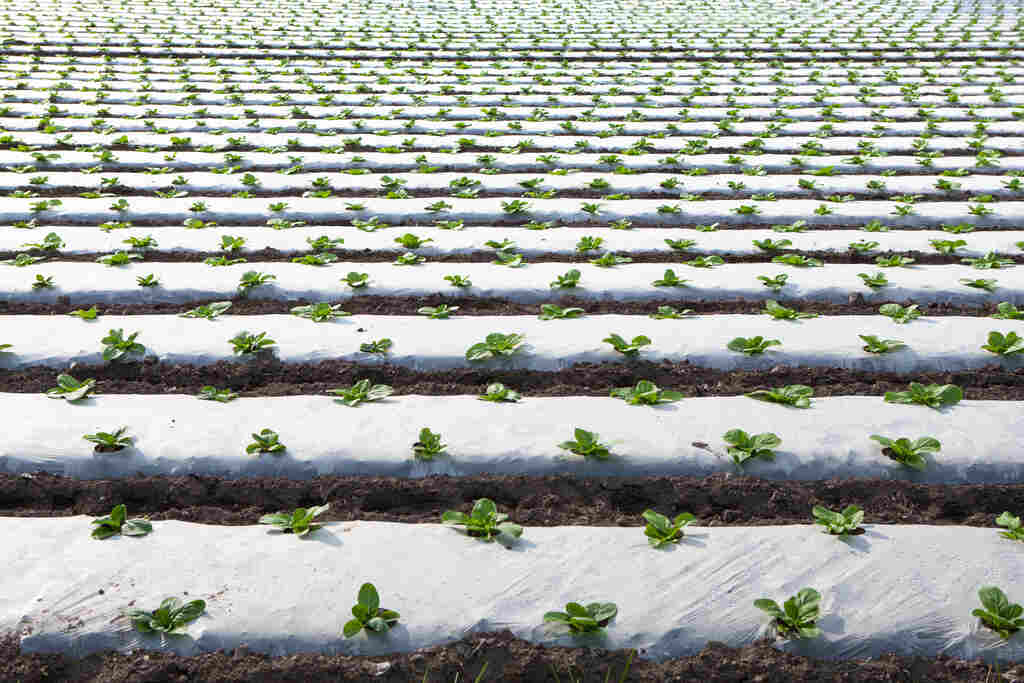
Mulch films are among the most commonly used agricultural plastics. They help maintain soil moisture and suppress weeds that compete with crops for nutrients.
They come in two primary types:
- Transparent mulch film — ideal for young plants as it allows sunlight to pass through.
- Colored mulch film (usually black/silver) — used to control weeds. The black side faces the soil to retain moisture, while the silver side reflects light to aid photosynthesis and deter pests.
ShadeNets&InsectNets
Often referred to simply as “netting,” these mesh fabrics protect crops from pests and regulate sunlight. They help reduce chemical usage, improve safety for farmers and consumers, and add value to marketable produce.
Various mesh sizes are available depending on crop type and pest species. Choosing a mesh that is too fine may restrict airflow or light, potentially affecting crop growth — so proper selection is crucial.
InnovationsinEco-FriendlyAgriculturalFilms
While agricultural films offer significant benefits, plastic residues can still accumulate in the environment if not properly managed. Today, new innovations help address this issue.
Eco-Mulch Film(Soil-Biodegradable Mulch)
Microplastic pollution is a growing environmental concern. Eco-mulch films are designed to biodegrade in soil, allowing farmers to plow them directly into the ground after harvest.
Benefits include:
- Reduced labor from film removal
- Improved soil quality
- No long-term environmental impact
Agricultural Films Made from Recycled Plastic
Plastic recycling is a key approach to reducing global plastic waste. GC has developed plastic resins suitable for agricultural films that can be recycled again after use — supporting a circular economy and reducing environmental impact.
Creating optimal growing conditions while minimizing pesticide use is a modern approach to safe, environmentally conscious farming. This method reduces costs and increases yields effectively.
GC, one of Thailand’s leading plastic resin producers, is committed to supporting the country’s agricultural sector through innovations in high-quality, durable, and sustainable agricultural film materials — helping reduce environmental impacts and ensuring long-term agricultural productivity.
References
- Agricultural Film Product Information, Retrieved October 18, 2023 https://productsandsolutions.pttgcgroup.com/th/solutions/agricultural-film
- Polymers in Greenhouse Film Applications, Retrieved October 18, 2024 https://www.mtec.or.th/post-knowledges/32991/
- Types of Films Used in the Agriculture Sector, Retrieved October 18, 2023 https://www.palvimasterbatches.com/blog/types-of-films-used-in-agriculture-sector
- Soil-Biodegradable Mulch Films for Sustainable Food Production, Retrieved October 18, 2023 https://agriculture.basf.com/global/en/business-areas/crop-protection-and-seeds/agricultural-films.html
- Eco-friendly Mulch Films, Retrieved October 18, 2023 https://www.research.chula.ac.th/th/news/6696/
- Understanding Insect Nets, Retrieved October 18, 2023 https://www.hrdi.or.th/articles/Detail/1528
- Agricultural Films: Sustainable Plastic Use in Agriculture, Retrieved October 18, 2023 https://bisresearch.com/news/agricultural-films-making-a-sustainable-use-of-plastic-in-the-agriculture-industry
PCR PET: Giving Used Plastics a New Life for 100% Safe Food and Beverage Packaging
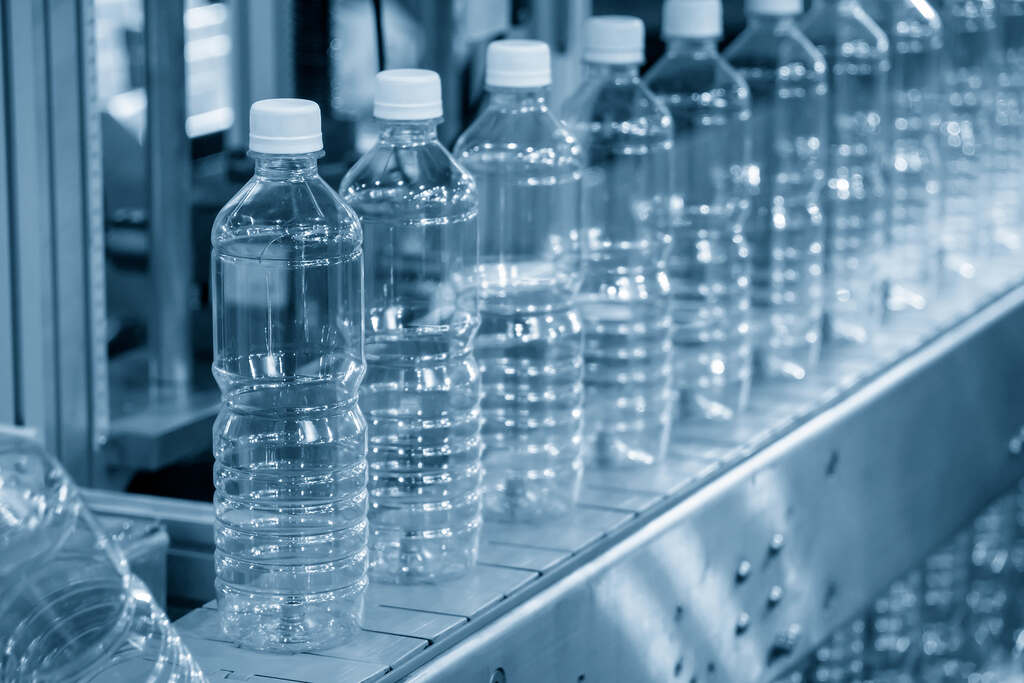
Today, plastic waste has become one of the world’s most pressing environmental issues. Beyond reducing plastic consumption, proper waste separation and recycling are among the most effective solutions. In this article, we introduce Post-Consumer Recycled Resin PET, or PCR PET—a Food-Grade recycled plastic that can safely be used for water and food packaging, offering 100% safety.
Overflowing Plastic Waste: Less Than 10% Is Recycled
Plastic has long been a material that brings convenience to our daily lives. It exists in far more places than we realize—computers, car parts, phone cases, pens, fans, and, of course, food and beverage packaging.
The world produces and consumes massive amounts of plastic each year, especially single-use plastics. Alarmingly, less than 10% of global plastic waste is properly managed and recycled, resulting in widespread contamination in the environment. This has led to global movements encouraging plastic reduction and increased use of recycled plastics.
Where Does the Rest of the Plastic Go?
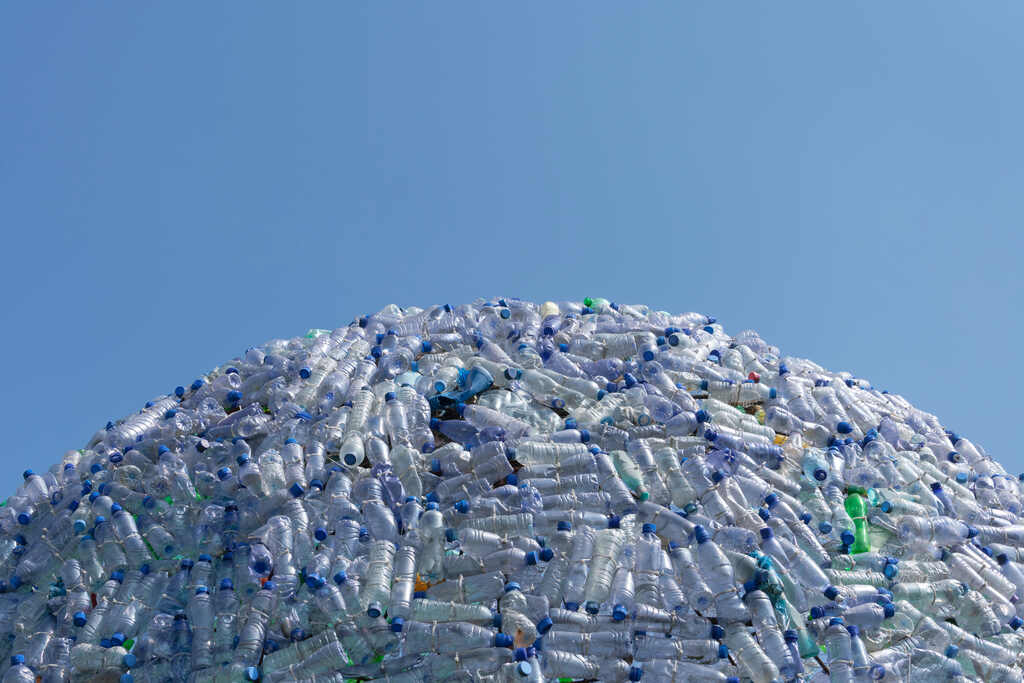
More than 85% of plastic waste ends up in landfills, where it can take hundreds of years to degrade. Some of it breaks down into microplastics that pollute ecosystems, wash into oceans, and ultimately make their way into the food chain—affecting both humans and animals.
How Much Plastic Does the World Produce Each Year?
In 2019, the world produced 460 million metric tons of plastic. Since plastic production began in 1950, global usage has increased every year. Today, accumulated plastic waste has surpassed 8.5 billion tons, equivalent to the weight of 25,000 Empire State Buildings.
If we fail to take collective action, the vision of Earth becoming a “plastic planet” may not be far off.
What Is PCR PET, and How Can It Change the World?
Global brands, especially large-scale producers, are actively seeking ways to reduce plastic use in their packaging. One of the most promising solutions is using recycled plastic—specifically high-quality, safe, and clean recycled PET.
PCR PET (Post-Consumer Recycled Resin PET) is made from used PET bottles, commonly found in single-use food and beverage packaging. These bottles go through a thorough cleaning process, material sorting, crushing, and remelting to produce new plastic pellets. The result is Food-Grade recycled PET that is safe for direct contact with food and beverages, with no risk to consumer health.
What Makes Plastic “Food Grade”?
Food-Grade plastic is safe for contact with food and beverages and contains no harmful residues. Both virgin and recycled Food-Grade plastics must be certified by the Food and Drug Administration (FDA). Consumers can identify such products by looking for the “Food Safe” symbol—a wine glass and fork icon—on the packaging.
Giving PET Plastics a New Life
PET plastic is widely used today because it is safe for food contact and has excellent clarity, making packaging visually appealing. It is typically used for single-use food and beverage containers.
This is why effective PET recycling can significantly reduce plastic waste. PCR PET not only transforms used plastic into valuable material again but also raises the recycling standard by enabling the production of Food-Grade recycled plastic. This helps reduce plastic waste in two ways:
- Reusing discarded plastic
- Reducing the need for new (virgin) plastic production
However, efficient recycling requires collaboration from all stakeholders:
- Plastic producers must ensure high-quality PCR PET production
- Brand owners must commit to reducing plastic waste and greenhouse gas emissions
Consumers must choose eco-friendly packaging and practice proper waste separation
Together, these actions help reduce single-use plastic waste and prevent environmental contamination.
Global Beverage Brands Have Already Started Are You Ready to Join?
While avoiding all single-use plastic may not be possible, we can still choose more environmentally friendly options. Consumer awareness and brand commitment are key drivers of change.
Many leading global beverage brands that rely on PET bottles are now embracing 100% PCR PET to support Bottle-to-Bottle Recycling. Many brands also collaborate with partners to set up PET bottle collection bins, encouraging proper waste sorting and reducing contamination—ensuring bottles can be recycled effectively and safely.
For business owners seeking high-quality, food-safe, and environmentally responsible packaging, PCR PET is the answer. You can contact GC and ENVICCO, Thailand’s leading producers of premium recycled plastic pellets. As innovators in sustainability, we offer tailored solutions to support your business and reduce plastic waste.
References
- “ENVICCO and PepsiCo launch the first use of InnoEco PCR PET in Thailand.” Retrieved October 17, 2023. https://productsandsolutions.pttgcgroup.com/th/market-movement/ldquo-envicco-และ-เป๊ปซี่-เปิดตัวการใช้งานเม็ดพลาสติก-innoeco-pcr-pet-ครั้งแรกในไทย-rdquo
- “GC and ENVICCO host seminar: ‘InnoEco PCR PET by ENVICCO for Food Packaging: 1st Thai FDA Approved’.” Retrieved October 17, 2023. https://www.pttgcgroup.com/th/newsroom/news/1262/gc-และ-envicco-จัดงานสัมมนา-innoeco-pcr-pet-by-envicco-for-food-packaging-1st-thai-fda-approved
- “For the first time in Thailand: GC develops high-quality, Food-Grade recycled plastic pellets certified by the Thai FDA.” Retrieved October 17, 2023. https://ngthai.com/news-activity/48150/pcr-pet-gc/
- “The world flooded with plastics after 65 years of production.” Retrieved October 17, 2023. https://www.bbc.com/thai/international-40678972
- “Recycling Facts and Stats from Around the World.” Retrieved October 17, 2023. https://www.cartakebackaust.com/blog/in-the-know/recycling-facts-and-stats-from-around-the-world
- “Why most plastic can’t be recycled.” Retrieved October 17, 2023. https://www.dw.com/en/why-most-plastic-cant-be-recycled/a-64978847
- “Main uses of PET, the king of plastic materials.” Retrieved October 17, 2023. https://www.repetco.com/main-uses-of-pet-the-king-of-plastic-materials/
HD4200B
LL7625A
GC Participates in the PITH Annual Seminar 2025
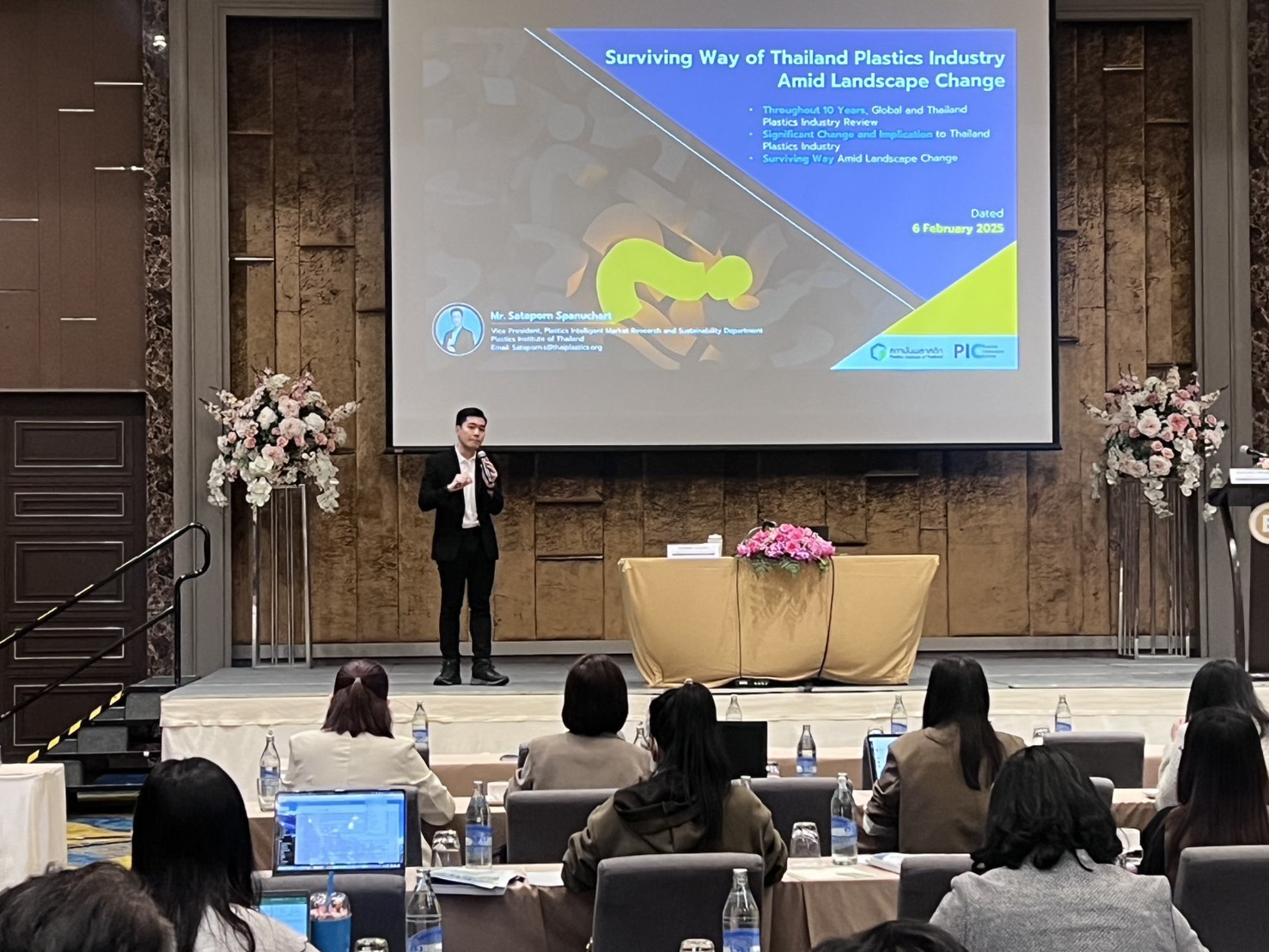
The Plastics Institute of Thailand organized the PITH Annual Seminar 2025 on 6–7 February 2025 at The Berkeley Hotel Pratunam. The event aimed to provide insights into global economic trends, relevant environmental regulations, and strategic directions to enhance the readiness and competitiveness of Thailand’s plastic industry amid the rapidly evolving global trade landscape.
The seminar featured an exhibition showcasing innovations and sustainable products from various industry participants. Notably, GC, a leading plastic resin producer, participated by presenting its PCR products made from recycled plastic resins as an alternative solution for consumers, supporting the advancement of resource efficiency in line with the principles of the Circular Economy.
This event reflects the industry’s ongoing commitment to strengthening sustainability capabilities while providing a platform for knowledge exchange and collaboration. Such efforts play a crucial role in driving the Thai plastic industry toward stable growth and alignment with international standards in the future.
GC Hosts “X PURGE by GC for Medical & Cosmetic Manufacturing” Showcasing High-Performance Purging Innovations
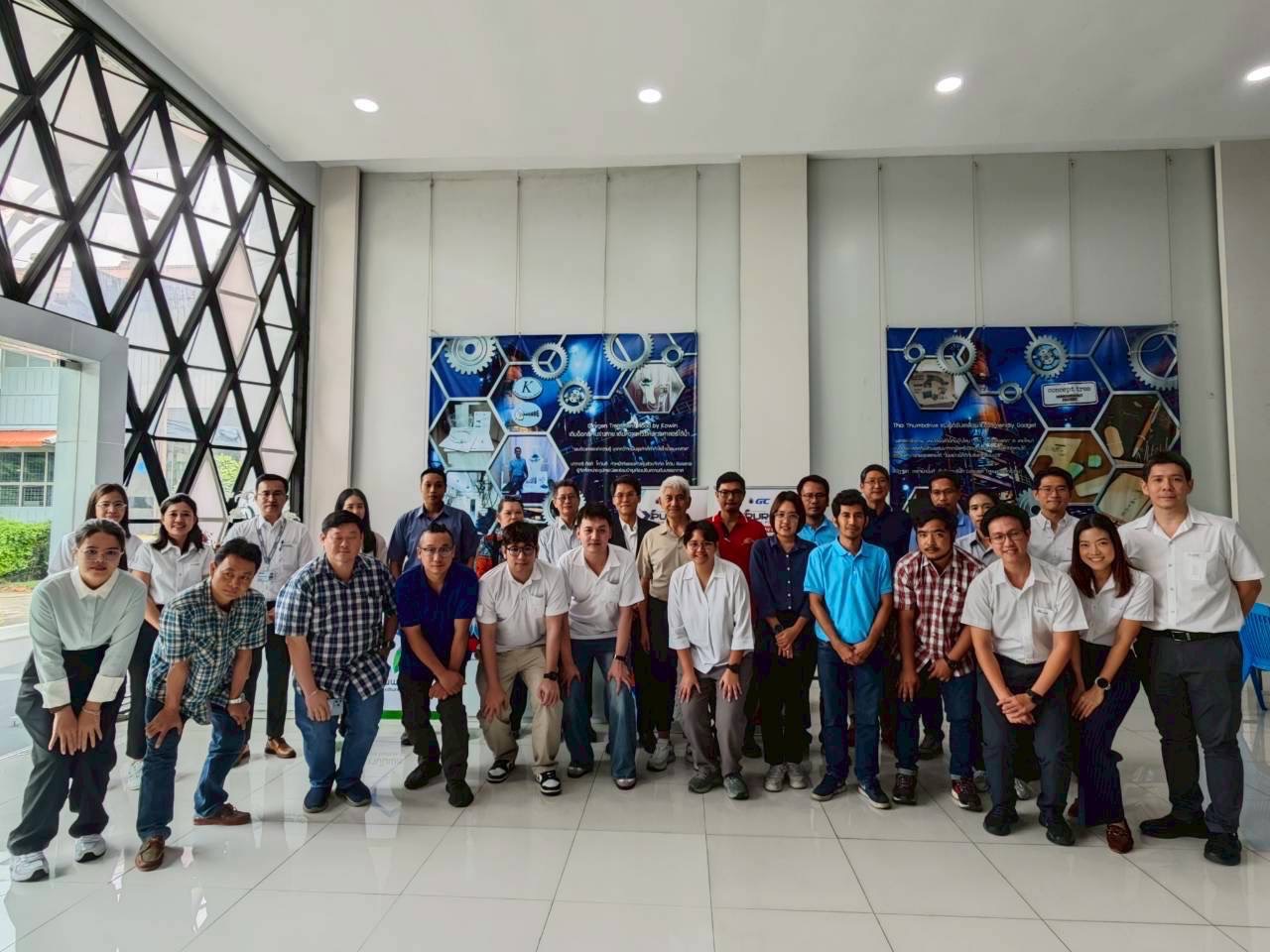
PTT Global Chemical Public Company Limited (GC) that is Plastic resin manufacturers in Thailand, organized the “X PURGE by GC for Medical & Cosmetic Manufacturing” event on 24 September 2025 at the Plastics Institute of Thailand. The event aimed to provide in-depth knowledge and a hands-on demonstration of X PURGE by GC, a high-performance purging compound designed for plastic manufacturing processes. Customers from the medical and cosmetic industries participated in this exclusive session.
The program began with welcoming remarks from GC’s management, who highlighted common challenges in plastic molding—such as black spots and contamination on finished products—often caused by material residue inside machines. To address these issues, GC developed X PURGE by GC, an innovative purging solution that effectively cleans machinery using less material and shorter cleaning time, helping reduce defects, downtime, production costs, and energy consumption.
The event featured a technical presentation on product applications and success cases, followed by a live purging demonstration on an injection molding machine conducted by GC’s technical experts. This allowed participants to clearly observe the product’s cleaning efficiency and practical usage.
This activity reflects GC’s commitment to supporting plastic manufacturers in enhancing production efficiency and improving process reliability. By providing knowledge and practical solutions, GC aims to empower the industry to elevate product quality and strengthen competitiveness in a sustainable manner.
LD2426K
LL7610A
HD4000F
HD1010J
Expand Your Flexible Packaging Applications with InnoPlus by GC LD1826L
.png)
? Expand Your Flexible Packaging Applications with InnoPlus by GC LD1826L ?
InnoPlus by GC LD1826L plastic resins are developed to suit various flexible packaging formats, meeting manufacturers’ needs including:
✅ Rubber Wrapping Film
✅ Zip bag film
✅ Food packaging film
✅ General purpose film
✨ Why Does LD1826L Meet Manufacturers’ Needs❓
?? Rubber Wrapping Film
? LD1826L - Single resin solution, no need to blend with other plastic resins
? Low & consistent melting temperature (<109°C) → Melting temperature reduced to 108°C, complying with the Ministry of Agriculture and Cooperatives’ announcement regarding packaging. Plastic bags used for premium grade rubber packaging must be clear polyethylene or polythene, low density, with a melting temperature not exceeding 109°C
?? Rubber Wrapping Film / Zip Bag Film / Food Packaging Film / General Purpose Film
? High transparency → Clear, attractive film that supports printing applications
? Good mechanical properties → Strong, flexible film with excellent durability
? Good processability → Easy forming, fast production, reduced energy consumption
? InnoPlus by GC LD1826L is the answer for manufacturers seeking innovative plastic pellets for high-quality packaging that enhances production convenience while delivering film strength and aesthetic appeal.
GC: Total Solution Provider where Innovation Meets Sustainability
Enhance Shrink Film Production with InnoPlus LL7903A A high-quality plastic resins from GC specifically developed
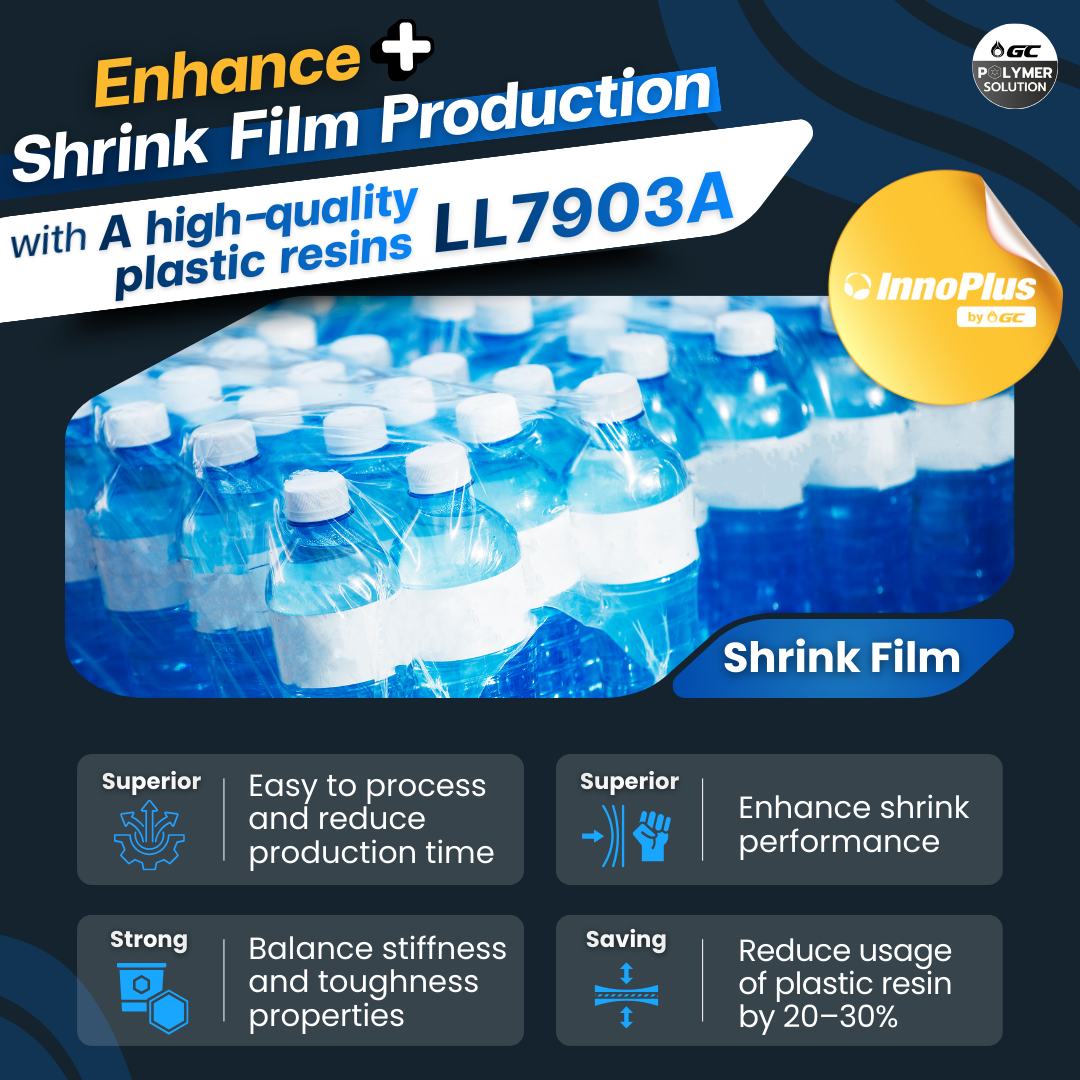
Enhance Shrink Film Production with InnoPlus LL7903A
A high-quality plastic resin from GC specifically developed to meet the needs of manufacturers.
Fun Fact : Shrink film can achieve high strength, flexibility, and great shrink performance when produced with specialized plastic resin.
One of the trusted grades is:
InnoPlus LL7903A by GC, is a high-quality Metallocene Polyethylene resin with hexene comonomer, developed to deliver shrink film that meets specific application requirements!
Superior: Easy to process and reduce production time.
Superior: Enhance shrink performance.
Strong: Balance stiffness and toughness properties
Saving: Reduce usage of plastic resin by 20–30% (compare to formulations using LLDPE C4.
Choose branded “InnoPlus by GC” to elevate your packaging and meet consumer expectations.
GC : Total Solution Provider where Innovation Meets Sustainability
For more information: https://bit.ly/3wRUU1O
#GC #GCPolymerSolution #InnoPlusbyGC #FlexiblePackaging #ShrinkFilm
InnoPlus by GC LL7905AO : The innovative plastic resin which is developed with a deep understanding in every step of film production
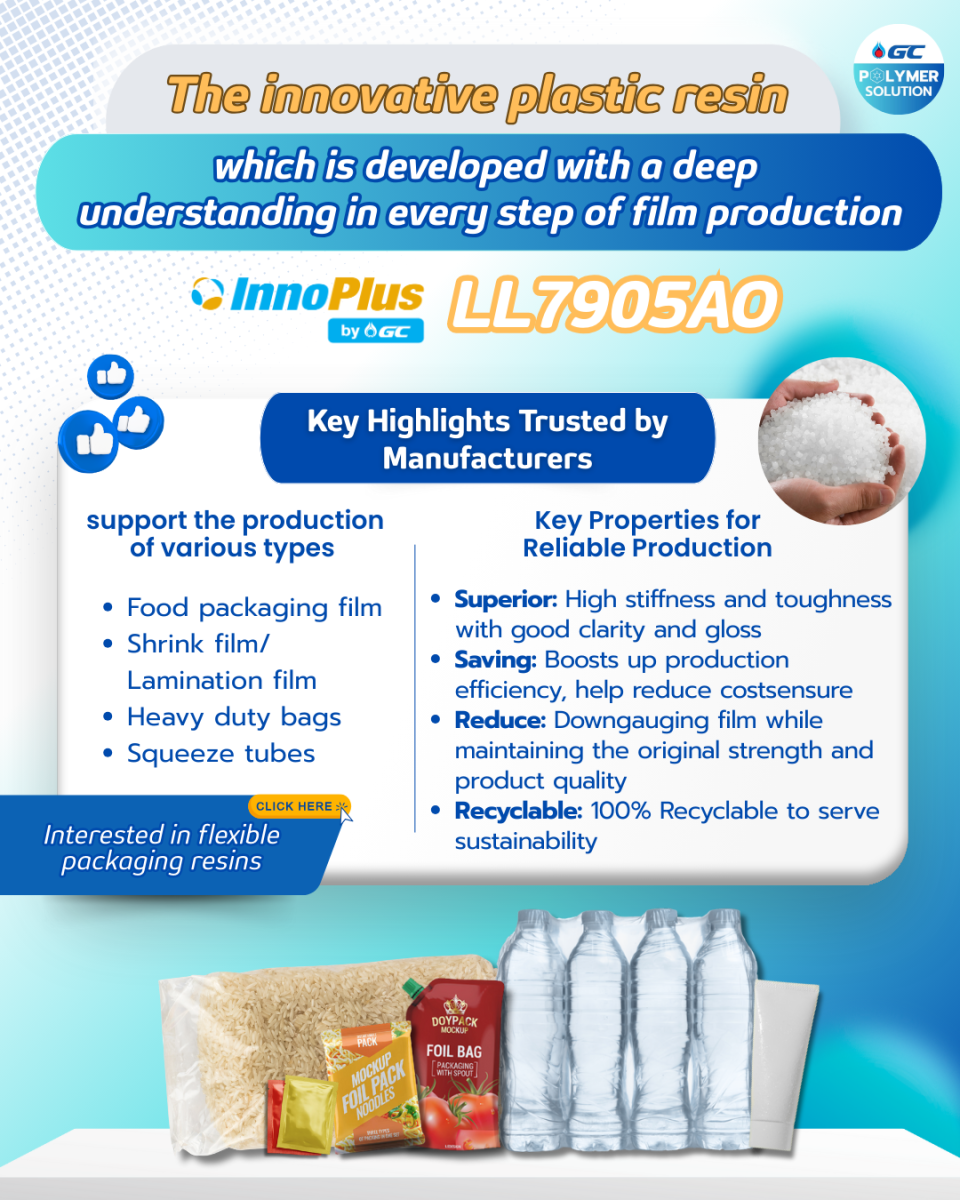
InnoPlus by GC LL7905AO : The innovative plastic resin which is developed with a deep understanding in every step of film production
If you are seeking for a plastic resin that delivers all key beneficial functions consisting of "strength, clarity, cost-effectiveness, and recyclability", InnoPlus by GC LL7905AO is the right answer! Featuring high-quality, international standard Metallocene Polyethylene with hexene comonomer innovative plastic resin, it is designed to support the production of various types of flexible packaging films, such as:
Food packaging film
Shrink film/ Lamination film
Heavy duty bags
Squeeze tubes
The highlights that make InnoPlus LL7905AO by GC is worldwide trusted plastic resin:
Superior: High stiffness and toughness with good clarity and gloss, making it suitable for premium packaging.
Saving: Boosts up production efficiency, help reduce costs ensure smooth production process, decrease machine downtime, and minimizes material waste.
Reduce: Downgauging film while maintaining the original strength and product quality.
Recyclable: 100% Recyclable to serve sustainability
GC : Total Solution Provider where Innovation Meets Sustainability
For more information : https://bit.ly/3wRUU1O
#GC #GCPolymerSolution #InnoPlusbyGC #เม็ดพลาสติก #บรรจุภัณฑ์แบบอ่อน #Flexiblepackaging #โพลิเมอร์ #พอลิเมอร์
It is time to enhance flexible packaging for easier recyclability
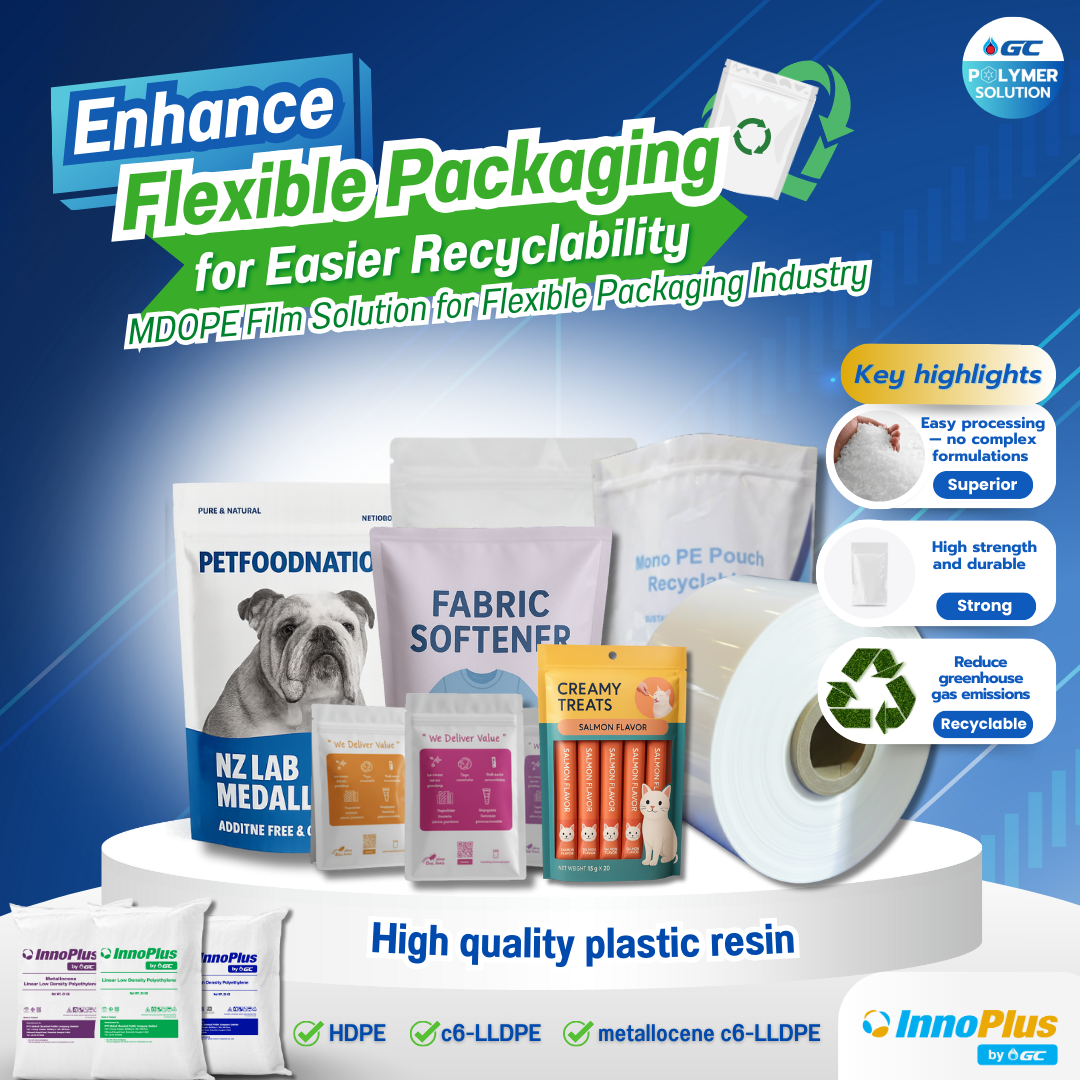
It is time to enhance flexible packaging for easier recyclability
Currently, most pouches packaging are made from multi material plastics (e.g., BOPA/LLDPE or BOPET/LLDPE), which cannot be separated and recycled.
MDOPE Film (Machine Direction Orientation PE Film) is one of the latest solutions for the flexible packaging industry — enabling 100% recyclable packaging with CEFLEX design, without compromising its performance.
Key Benefits for Manufacturers including Brand owners
High clarity and quality to support superior printing performance
Versatile thickness options – adaptable for multiple flexible packaging applications
Easy processing — no complex formulations
Fully recyclable — enhance brand sustainability image
Recommended InnoPlus by GC :
HDPE, metallocene c6-LLDPE, and c6-LLDPE in the formula to ensure stable production, high-quality film output, and suitable for various flexible packaging applications — ranging from Food & Beverage to Home and Personal Care packaging.
GC is committed to collaboration across the entire value chain — from converters and machine makers to brand owners — for transition flexible packaging to recyclable mono material solutions
GC: Total Solution Provider where Innovation Meets Sustainability
Turn Trash to Trash Bag! The Circular Economy Project by InnoEco by GC
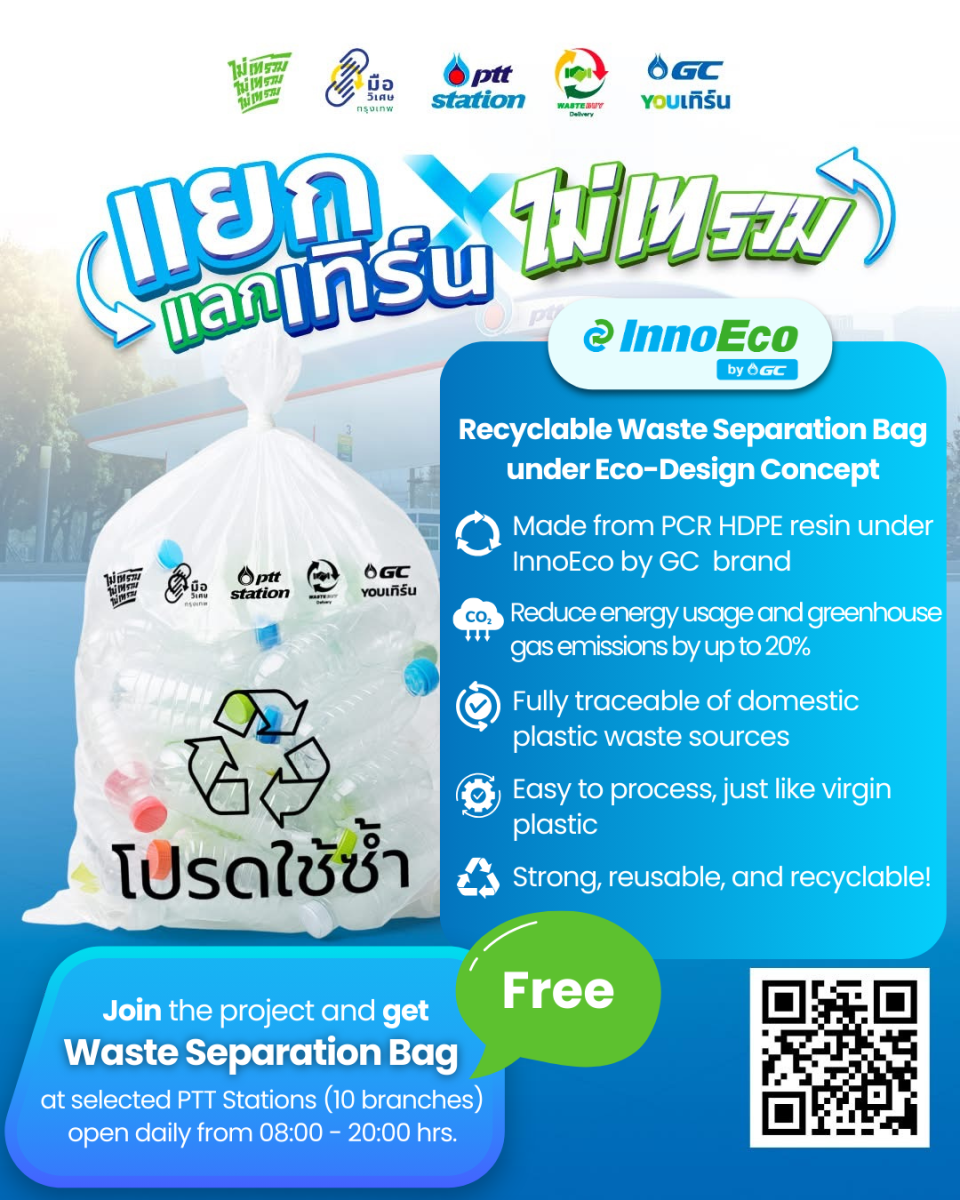
Turn Trash to Trash Bag!
The Circular Economy Project by InnoEco by GC
Did you know that the waste separation bag in the “Yaek Laek Turn x Mai Tae Ruam” project are maded from 30% high-quality PCR HDPE resin certified by international mechanical recycling process.
Here’s what makes them truly special:
- Made from PCR HDPE resin under the InnoEco by GC brand
- Reduce energy usage and greenhouse gas emissions by up to 20%
- Fully traceable of domestic plastic waste sources
- Easy to process, just like virgin plastic
- Strong, reusable, and recyclable!
Let’s do our part to “Yaek Laek Turn x Mai Tae Ruam” — Turning plastic waste into new and sustainable bags.
The sustainable future… starts with us.
Join the project and get Waste Separation Bag at selected PTT Stations (10 branches) — open daily from 08:00 - 20:00 hrs.
#InnoEcoByGC #PCRHDPE#แยกแลกเทิร์น #CircularLiving #GCStandOut #GCPolymerSolution