

Advanced Search
Results 2141 - 2160 of 2291
LL9641U1
LL9641UP
LL9650U2
LD2426H
LD2426H
Fishing Net
Fishing net is a woven trap made from high quality plastic. It is strong, weather resistance and last long including suitable for both marine and river fishing.
What Is Monofilament Yarn and What Are Its Uses?
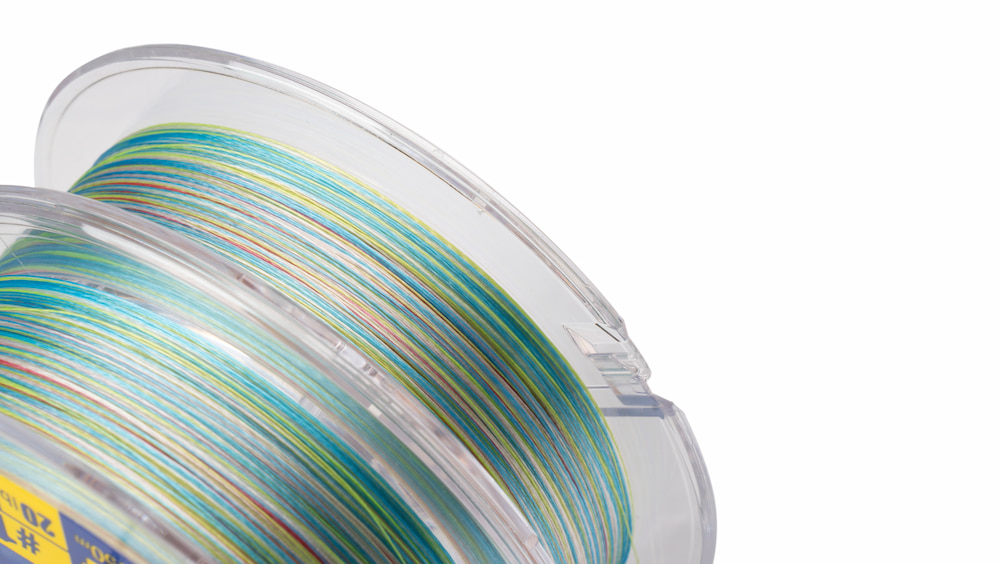
“Innovation” refers to newly created inventions that bring convenience and help solve various problems for humans. Modern innovations not only offer practical benefits but also help address environmental challenges. One such example is the innovation behind monofilament yarn production. Monofilament yarns are developed from materials that are strong, durable, and flexible—properties that allow them to be transformed into an unexpectedly wide range of products.
Understanding Synthetic Monofilament Yarn: Why It Can Be Used for So Many Purposes
Monofilament yarn is a synthetic fiber formed as a single continuous strand. It can be applied in various industries, including fisheries, agriculture, medicine, and textiles. Monofilament yarns are produced from several materials such as polyethylene (PE), nylon, polypropylene (PP), and fluoroplastics. More recently, innovation has expanded into creating monofilament yarn made from recycled plastics and environmentally friendly bioplastics. The material used determines the different properties of the yarn.
Although the raw materials differ, monofilament yarns share key characteristics: they are small in diameter, flexible, strong, durable, and transparent. In addition to being used as single-strand yarn, monofilament can also be twisted or spun into multi-strand forms such as two-ply, three-ply, or multi-ply yarns to enhance performance for specific applications.
Applications of Monofilament Yarn Across Industries
Thanks to its strength and durability, monofilament yarn is utilized in many industries, including the following:
Fishieries Industry
Fishing activities require equipment that is flexible, durable, resistant to tearing, and able to withstand both freshwater and saltwater environments. Crucially, the material must be nearly invisible underwater to avoid alerting fish or marine animals. This improves the efficiency of catching aquatic species.
For these reasons, monofilament yarn is used to produce ropes, nets, and seine nets for the fisheries industry. Its high strength and availability in various diameters allow it to withstand the pulling force from larger fish with excellent performance.
Agricultural Industry
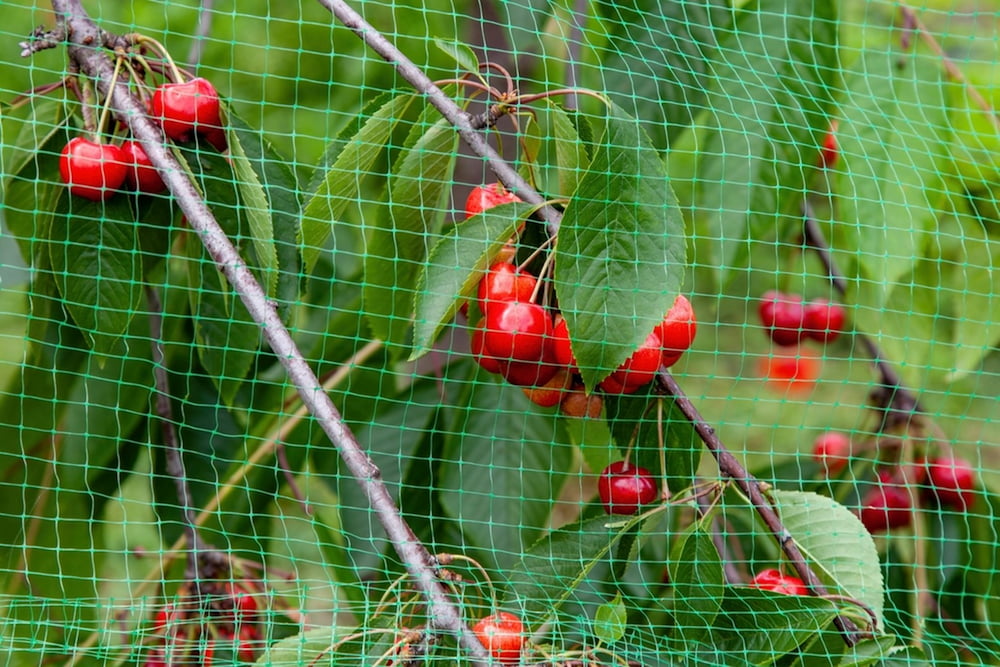
To achieve high-quality crop yields, farmers need tools that protect and maintain crop health against environmental conditions, weather, and pests. Monofilament yarn is used to create shade nets and insect-proof nets.
Due to its durability, environmental resistance, and versatile design options for agricultural fields of various sizes, monofilament shade and insect nets offer effective performance. They are also affordable, making them widely accessible.
Medical Applications
Many people may not realize that monofilament yarn also plays a role in the medical field. It is used to produce bandages and sutures. In dentistry, monofilament yarn is used to make dental floss and bristles for toothbrushes. These materials are stronger and more durable than typical fibers while still providing the gentle flexibility needed to protect gum and tooth health.
Textile Industry
Monofilament yarn is lightweight, breathable, and quick-drying, making it suitable for weaving into sportswear and outdoor clothing.
Innovation in monofilament yarn production has continued to advance, with polyester being developed into monofilament yarn that provides UV and sunlight protection. The level of protection depends on the type of fiber and the tightness or looseness of the weave. This is particularly beneficial for countries with hot and humid climates, such as Thailand. Such properties add value to the products and allow for higher pricing than standard apparel.
In addition to clothing, many footwear brands now use monofilament yarn to produce shoes that are lightweight and breathable—key characteristics required in sports footwear.
From Key Features to Versatile Applications
Today, monofilament yarn is used across many industries and produced from diverse materials to enhance specialized properties, including eco-friendly plastic options. Despite the differences in production, monofilament yarn remains affordable, lightweight, portable, easy to use, and reusable. Its versatility makes it suitable for applications ranging from electrical insulation—where it withstands heat and chemicals—to 3D printing, where its strength, durability, and low weight are essential.
Monofilament yarn is one of the continuously advancing material innovations, with ongoing improvements to enhance performance.
GC’s Monofilament Yarn Solutions
As one of Thailand’s leading plastic resin manufacturers, GC offers products and solutions tailored to industry needs. GC has developed InnoPlus HD5000S, a resin specifically designed for producing synthetic monofilament yarn. It enhances yarn strength, flexibility, processability, and durability while reducing production waste. This resin is ideal for producing ropes, nets, and fishing gear in the fisheries industry, as well as shade nets, insect nets, and woven sacks in the agricultural industry.
GC aims to be a partner in driving industrial potential forward. Choose the right solution for your business with us.
References
- “Monofilament”: A Tool for Leprosy Patients. Retrieved July 4, 2023, from https://mgronline.com/qol/detail/9530000005080
- Yarn and thread manufacturing methods for high-performance apparel. Retrieved July 4, 2023, from https://www.sciencedirect.com/topics/engineering/monofilament
- Properties and Compatibility of Artificial “Tapered-Tip” Monofilament for Sensory Testing in Diabetic Patients: A Pilot Study. Retrieved July 4, 2023, from https://www.rehabmed.or.th/main/wp-content/uploads/2014/03/L-290.pdf
- Nylon vs Polyester: Resistance to Water, Fire, Sun (UV) and Mildew. Retrieved July 4, 2023, from https://www.jasonmills.com/blog/nylon-vs-polyester/#:~:text=Polyester%20has%20a%20higher%20flammability,fades%20when%20exposed%20to%20sunlight.
Key Properties of mLLDPE for Film and Food Packaging Production
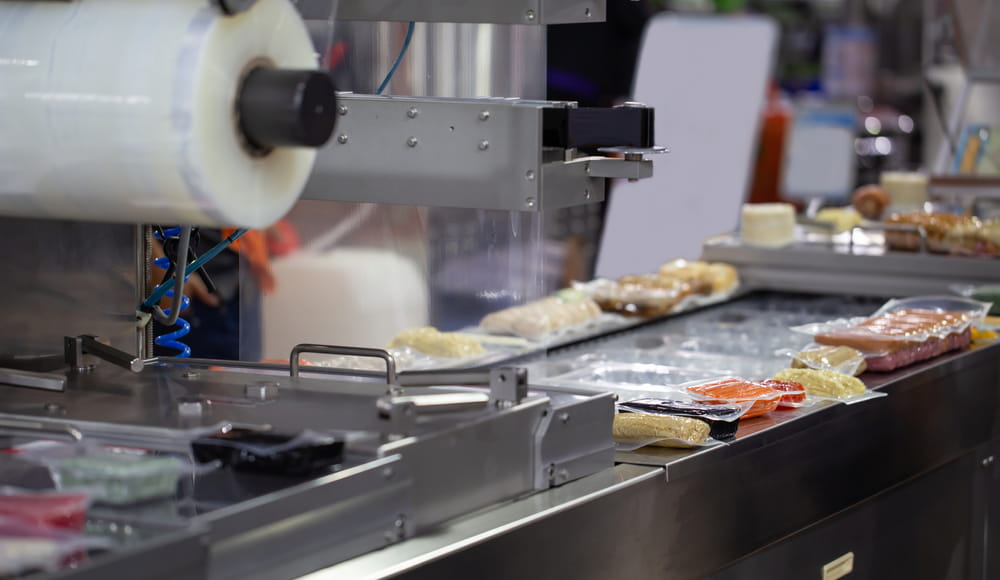
Good packaging plays a key role in keeping food fresh and ensuring it reaches consumers in perfect condition. Therefore, selecting the right material is essential. mLLDPE (Metallocene Linear Low-Density Polyethylene) has become one of the most widely used plastic resins for food packaging due to its outstanding properties and ability to meet diverse requirements. This article highlights the key properties and benefits that make mLLDPE a preferred choice for food packaging applications.
What is mLLDPE?
mLLDPE stands for Metallocene Linear Low-Density Polyethylene, a type of polyethylene with low density that is produced using metallocene catalyst technology. This advanced catalyst allows for a narrower molecular weight distribution and more uniform polymer chain structure compared to conventional LLDPE. As a result, mLLDPE offers enhanced mechanical properties, making it ideal for producing various food packaging films such as cling films, frozen food packaging, and fresh food packaging.
Why mLLDPE is Highly Recommended for Food Packaging
Excellent Tensile Strength
One of the most notable characteristics of mLLDPE is its superior mechanical strength. It provides excellent tensile performance, resulting in durable packaging that resists tearing and stretching. This is a key reason why mLLDPE is widely used in food packaging applications.
High Inpact Resistance
The polymer’s well-organized molecular structure allows mLLDPE to absorb impact energy effectively. This helps protect packaged food during transportation and storage.
Superior Tear Resistance
mLLDPE offers superior tear resistance compared to traditional LLDPE, supporting better durability across different usage and environmental conditions.
Puncture Resistance
With excellent puncture resistance, mLLDPE-based films help prevent damage from sharp objects and maintain the integrity of food inside.
Easy and Strong Sealing Performance
Packaging made from mLLDPE can be sealed at lower temperatures compared to LLDPE and produces stronger, more secure seals. This helps minimize leakage and contamination risks.
Safe for Food Contact
mLLDPE is certified safe for direct food contact. It contains no harmful chemicals that could migrate into food, ensuring consumer safety and product quality.
Recycable
mLLDPE packaging is recyclable, supporting sustainable development goals and reducing environmental impact. This enhances brand reputation and consumer trust in responsible packaging solutions.

How mLLDPE Outperforms Conventional LLDPE in Food Packaging
Due to its narrower and more uniform molecular structure, mLLDPE demonstrates superior performance in tensile strength, impact resistance, tear resistance, puncture resistance, and sealability. These advantages make mLLDPE a preferred choice for a wide range of modern food packaging applications that require high functionality and durability.
Using mLLDPE not only improves food protection but also helps reduce long-term production costs. Manufacturers can downgauge film thickness while maintaining strength, saving both raw materials and energy. In addition, its recyclability helps reduce plastic waste and supports circular economy principles.
mLLDPE is considered a key innovation in the food packaging industry. For producers seeking high-quality resin for film and food packaging applications, InnoPlus offers a variety of mLLDPE grades such as LL7810A, LL7910A, LL7903A, and LL7905AM. For more information, customers can contact GC, Thailand’s leading polyethylene producer.
Reference
Metallocene Polyethylene. Retrieved July 10, 2024, from https://packaging.oie.go.th/new/admin_control_new/html-demo/file_technology/8709614325.pdf
Food-Grade Recycled Plastic Resins Are Real! Safe and Good for the Planet
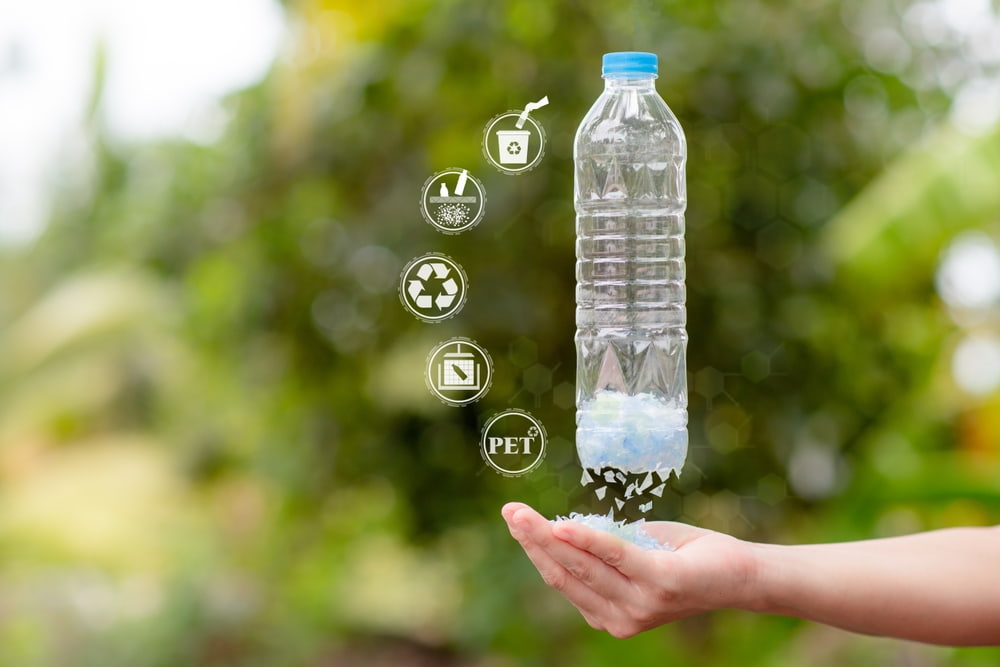
Food-grade recycled plastic resins can be safely used for packaging
Believe it or not, household post-consumer plastic waste can be safely recycled into food and beverage packaging. Today, we introduce food-grade recycled plastic resins, addressing questions about their safety and benefits for organizations.
What are recycled plastic resins from household plastics?
Recycled plastic resins from household plastics, known as PCR (Post-Consumer Recycled) by GC, are made from used household plastics. These plastics are sorted, cleaned, and shredded before being melted and formed into new plastic resins.
Most recycled plastic resins are used to produce clothing, textiles, household items, and toys. However, today, it is possible to produce recycled plastic resins that are safe for food and beverage packaging.
Can food-grade recycled plastic resins from household plastics really be made? Are they safe?
Recycled PET plastic resins from household plastics (PCR PET or rPET) under the brand InnoEco by GC can be produced. Using advanced sorting, cleaning, and strict quality control throughout the production process, PCR PET or rPET recycled plastic resins from household plastics are produced to be safe, high-quality, and suitable for use in food and beverage packaging.
These resins are safe because the production process meets strict standards and is certified by relevant authorities such as the Thai FDA (Food and Drug Administration). Therefore, they can be confidently used in food-grade packaging without concerns about chemical residues or contamination.
PCR PET or rPET: High-quality food-grade recycled plastic from InnoEco by GC
In Thailand, business owners can choose PCR PET or rPET, high-quality recycled plastic resins from InnoEco by GC. These resins are 100% made from domestically recycled PET from household plastics, produced using the latest technology and strict quality control throughout the process.
Properties of PCR PET or rPET resins from InnoEco by GC:
- Clean, safe, free of chemical residues, and certified by Thai FDA, EFSA (EU FDA), and US FDA for use in food and beverage packaging.
- Durable, strong, and suitable for a wide range of applications.
- High heat-resistant, microwave- and dishwasher-safe packaging
Applications for food-grade recycled PET from InnoEco by GC:
- Drinking bottles
- Food trays
- Food containers
- Coffee cups

Why choose food-grade recycled PET resins from household plastics by InnoEco by GC?
Environmentally friendly, reduces the use of virgin plastic
Using recycled resins reduces the need for new plastic production, saving natural resources and energy. Recycling also lowers greenhouse gas emissions and pollution from manufacturing, benefiting the environment in the long term.
Reduces plastic waste from single-use food and beverage packaging
Single-use packaging is a major source of plastic waste. Using recycled household plastics helps minimize waste by reusing materials efficiently.
Reduces the use of virgin plastic in production
Incorporating recycled resins reduces the need for new plastic, conserving natural resources and mitigating environmental impact.
Enhances environmental leadership image in the food and beverage industry
Using recycled materials demonstrates social and environmental responsibility, creating a positive brand image and reinforcing leadership in sustainability—a key concern for consumers today.
Attracts eco-conscious customers
Modern consumers increasingly prefer sustainably produced products. Food packaging made from household recycled plastics can be a strong selling point for this audience.
Supports a circular econom
Using recycled household plastics is an essential part of the circular economy, a policy emphasized by both the Thai government and international organizations. This helps preserve the environment and aligns business operations with current and future sustainability regulations, ensuring long-term business viability.
For business owners looking for plastic options that are good for the planet, beneficial for business, and safe for consumers, recycled household plastics (PCR) from technologically advanced and quality-driven facilities under the InnoEco by GC brand offer an ideal solution. Businesses can contact GC for consultation and customized solutions.
References
- “Get to Know High-Quality PCR Recycled Plastics from InnoEco: How High Is It? No Need to Guess, It’s Food-Grade Safe.” Retrieved June 21, 2024, fromhttps://www.pttgcgroup.com/th/newsroom/feature-stories/1310/รู้จัก-pcr-พลาสติกรีไซเคิลคุณภาพสูงจาก-innoeco-สูงขนาดไหน-ไม่ต้องถามใจ-แต่ปลอดภัยระดับ-food-grade
- “Getting to Know rPET: When Reducing Plastic Use is Difficult.” Retrieved June 21, 2024, from https://www.the101.world/rpet/
What Are Intermediate Bulk Containers? and How to Choose the Right One?
Key Features of a Safe and Reliable Intermediate Bulk Container or IBC
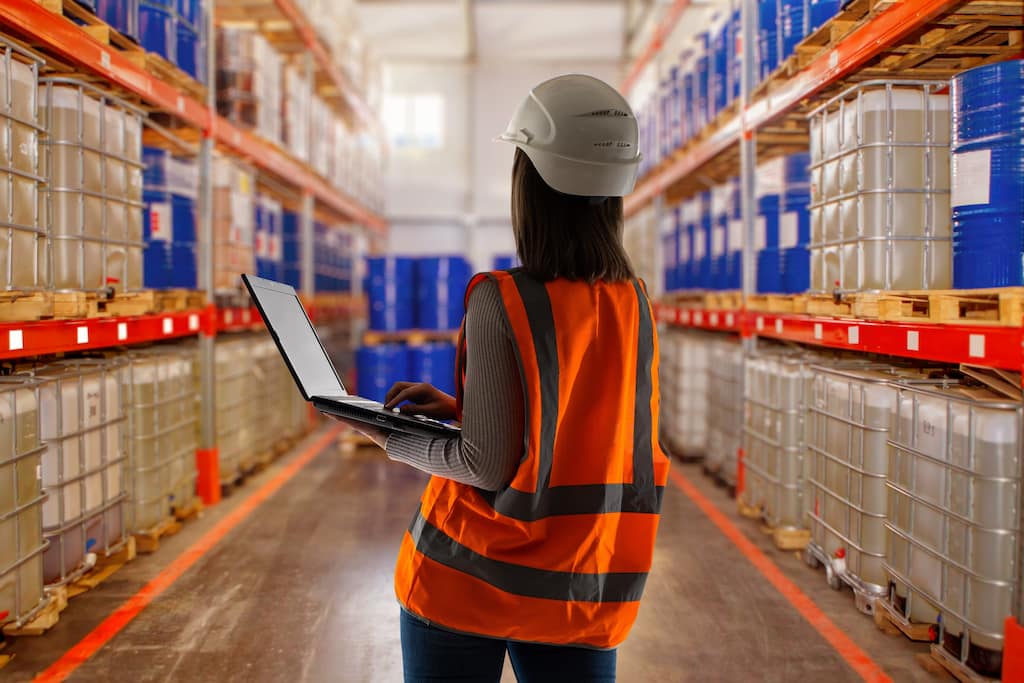
Chemical storage tanks are essential packaging used in both industrial operations and small businesses. These tanks are designed to be strong, durable, and resistant to corrosion to prevent leaks and environmental contamination.
Among various materials used to produce chemical tank, High Density Polyethylene (HDPE) is one of the most popular choices because it provides excellent strength and high chemical resistance, making it suitable for long-term storage of many types of chemicals
What Is Intermediate Bulk Container?
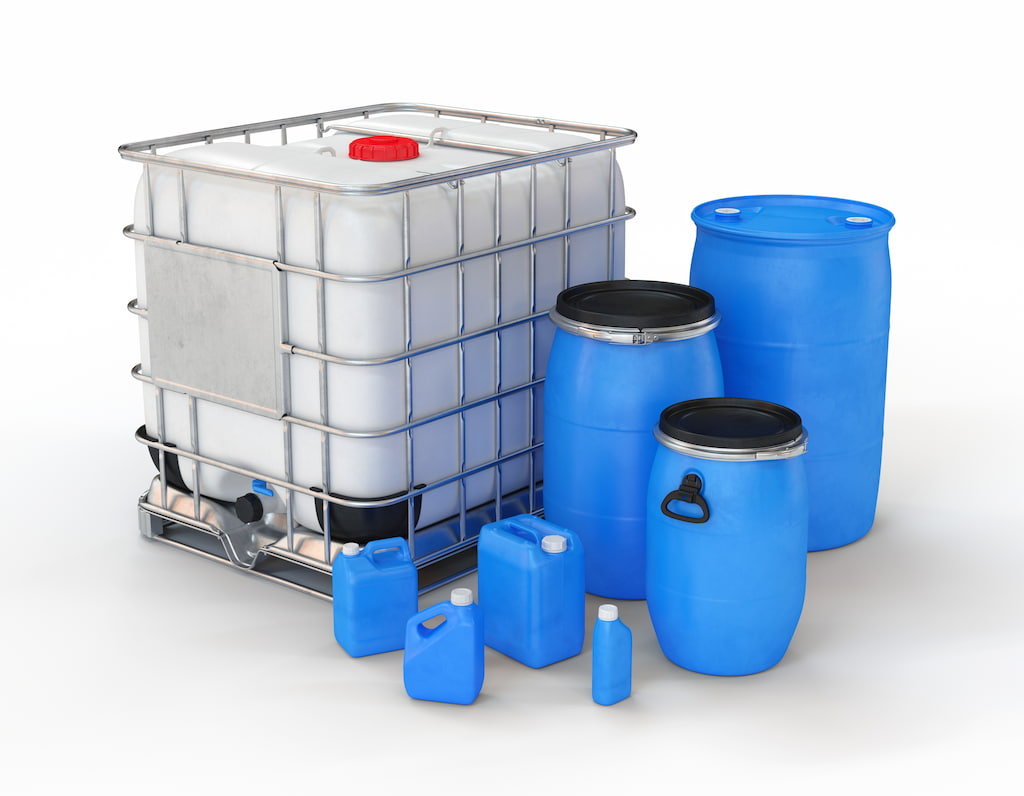
Intermediate Bulk Container or IBC is a container used to store different kinds of chemicals safely, preventing leaks, spills, and environmental contamination. These tanks come in various materials and sizes, depending on the chemical type and application.
IBC design often follows API 650, a standard outlining minimum requirements to ensure safe and reliable chemical storage without harming people or the environment. Since each chemical varies in corrosion level, flammability, and toxicity, the tank must be selected according to the specific chemical being stored.
IBC can be categorized into two main types:
Hazardous chemical tanks — used for flammable, toxic, acidic, or alkaline chemicals.
General-purpose tanks — used for water, oils, gases, and less hazardous substances.
Tank sizes vary widely, from small containers (1–10 liters) to medium (10–100 liters) and large (100–1,000 liters). Large-scale chemical storage must comply with the safety standards of the Department of Industrial Works to ensure safe handling.
Key Characteristics of IBC
IBC must be designed to be strong, stable, non-reactive, and resistant to corrosion. It should not degrade or allow chemical leakage.
The materials used to produce chemical storage tanks can be categorized into four main types:
- Plastic Tanks The most widely used option. Lightweight, cost-effective, and resistant to corrosion from many chemicals. HDPE, LDPE, and XLPE are commonly used resins due to their durability and long service life.
- Metal Tanks Usually made from stainless steel. They offer high resistance to corrosion and impact but may not be suitable for certain aggressive chemicals. They are heavier than plastic and fiberglass tanks.
- Fiberglass Tanks Corrosion-resistant, heat-resistant, rust-free, and lighter than metal and concrete tanks. Suitable for many industrial applications.
- Concrete Tanks Less commonly used today. Often require additional coatings to prevent leaks and protect against chemical corrosion.
When selecting a tank, the type of chemical is the most important factor to ensure the tank material is suitable for its intended use.
How to Choose a Safe IBC
Select a tank compatible with the chemicals being stored, ensuring no corrosion or harmful reactions.
Choose tanks that meet industrial standards for durability and leak prevention.
Ensure proper installation, especially for tanks requiring electrical systems, lightning protection, and safety monitoring equipment.
Benefit of HDPE IBC
InnoPlus by GC, GC’s high-quality plastic resin brand, has developed HDPE resins specifically for blow-molded large containers starting from 20 liters.
| Tanks Size | Recommended InnoPlus HDPE Grades |
| 20-100 liters | InnoPlus HD7200B |
| less than or equal to 200 liters | InnoPlus HD8200B และ HD9100B |
| Above 200 liters | InnoPlus HD7200B / HD7800B และ HD8200B |
| Up to 1,000 liters (e.g., IBC tanks) | InnoPlus HD7808B |
All InnoPlus by GC HDPE grades are high-density polyethylene resins with excellent processability and high environmental resistance. Key benefits include:
Strong, tough, and long-lasting
Excellent durability for various operating conditions
High resistance to corrosion from acids, alkalis, oils, and chemical solutions
Suitable for all chemical types — including food ingredients, pharmaceuticals, compost liquids, general chemicals, and hazardous chemicals
For manufacturers seeking high-quality, internationally certified HDPE resins for chemical tanks, GC provides advanced plastic innovations along with comprehensive technical support to meet your production needs.
References
- Chemical storage tanks – what are your options?. Retrieved on September 15, 2023, จาก https://industrialplastics.com.au/tank-storage.
- Chemical Storage Tanks: A Complete Guide. Retrieved on September 15, 2023, https://ironcladenvironmental.com/2023/07/10/chemical-storage-tanks-a-complete-guide/.
Eco-Friendly Packaging: A Sustainable Solution to Plastic Waste

Exploring the Rising Trends in Environmentally Friendly Packaging
Plastic waste has become an increasingly severe environmental issue, intensified by improper disposal and insufficient waste separation. The accumulation of unmanaged plastic waste has driven the development of innovative eco-friendly packaging solutions—such as bioplastics and mono-material packaging, to address environmental challenges in a sustainable way.
Current Situation of Plastic Waste
The continuous rise in plastic waste, coupled with decades of poor waste management, has negatively impacted ecosystems and living beings. This has led to global campaigns aimed at reducing plastic consumption, especially single-use plastics. Although alternative materials have been introduced, they often raise concerns about convenience and hygiene. As a result, manufacturers and consumers have shifted toward environmentally conscious plastic packaging that meets modern lifestyle needs.
What Is Eco-Friendly Packaging?
When discussing eco-friendly packaging, many people think only of 100% natural materials—such as leaf-based packaging or bagasse paper—that biodegrade easily. However, the concept is much broader. There are many other approaches to preserving the environment in a sustainable manner.
Eco-friendly packaging refers to packaging designed with environmental impact in mind across its entire life cycle—production, usage, and disposal. It must also be safe for humans, animals, and the environment, while effectively reducing plastic waste. Today, new innovations such as bioplastics and mono-material packaging offer both sustainability and the convenience required for modern living.

Eco-friendly packaging refers to packaging designed with environmental impact in mind throughout its entire life cycle—from production and usage to end-of-life disposal. It must also ensure safety and hygiene for people, animals, and the environment, while effectively reducing plastic waste. Today, a wide range of innovations have emerged to minimize environmental impact while still meeting the need for convenience and cleanliness, such as bioplastics and mono-material packaging.
Bioplastics: Rapidly Biodegradable Materials
Bioplastics, or bio-based plastics, are typically produced from natural renewable resources such as cassava, sugarcane, and corn. These materials are biodegradable and compostable, leaving no harmful residue in the environment. They are ideal for single-use applications or for food-waste bags that can be composted directly without generating contaminants.
As modern lifestyles shift toward convenience—driven by the growth of food delivery services and online shopping—bioplastic packaging and bio food service ware offer a solution that balances ease of use with environmental responsibility.
Key Advantages of Bioplastics
- Biodegradable (Compostable): Able to decompose without generating microplastics or harmful residues in the environment.
- Ideal for single-use packaging.
- Suitable for compostable wet-waste bags that break down into fertilizer in landfill conditions.
- Recycable
- Environmentally friendly: Helps reduce landfill waste and lowers carbon footprint.
Popular Types of Bioplastic Resins
• PLA (Polylactic Acid): Produced from sugar derived from corn or sugarcane. Suitable for food and beverage packaging and consumer products. It is stiff, transparent, and glossy. Under proper environmental conditions, it can biodegrade within 6 months.
• Bio-PBS (Bio-based Polybutylene Succinate): Made from succinic acid. It is also biodegradable under appropriate conditions and can break down within 6 months, like PLA.
Mono Material — Easy to Recycle, Supporting the Circular Economy
Mono Material refers to manufacturing products using a single type of plastic, making them easier to recycle, reducing energy consumption, and minimizing environmental impact. It withstands both high and low temperatures, is safe for food contact, and supports the circular economy. It is an excellent solution for businesses seeking durability, hygiene, and cost-effectiveness.
Key Advantages of Mono Material
• Easy to sort and recycle.
• Environmentally friendly throughout the product lifecycle.
• Requires less energy and water to produce.
• Can be reused multiple times.
• Reduces long-term production costs.
Popular Types of Mono Material Plastic Resins
• PE (Polyethylene): Highly flexible and chemically resistant. Commonly used for food wrap films, water bottles, plastic bags, and electrical components. Available in various grades such as HDPE, LDPE, and LLDPE.
• PP (Polypropylene): Lightweight, heat-resistant, and flexible. Ideal for hot food applications. Naturally opaque white. Commonly used in food packaging films, hot-food bags, and medical tools.
Transitioning to Environmentally Friendly Packaging is a key step in addressing plastic waste. Both bioplastics and mono-material packaging offer unique benefits that meet diverse business needs.
For high-quality plastic resins—whether for mono-material production or bioplastics you can contact GC, a manufacturer of biodegradable bioplastic resins that help reduce plastic waste and environmental impact.
References
- What Are Bioplastics? Pros and Cons. Retrieved July 4, 2024. จาก https://productsandsolutions.pttgcgroup.com/th/labels/bioplastics
- Understanding Mono Material for Packaging — An Eco-friendly Solution. Retrieved July 4, 2024. https://productsandsolutions.pttgcgroup.com/th/blog/รู้จัก-mono-material-สำหรับผลิตซองบรรจุภัณฑ์-โซลูชั่นที่เป็นมิตรต่อสิ่งแวดล้อม
- Bio Food Serviceware: Convenience for a Better World. Retrieved July 4, 2024. https://sustainability.pttgcgroup.com/th/newsroom/featured-stories/948/bio-food-serviceware-ความสะดวกสบายที่มาพร้อมกับโลกที่ดีขึ้น
- Understanding Bioplastics — A Hope for Humanity. Retrieved July 4, 2024. https://www.whaleenergystation.com/environment/4453/